
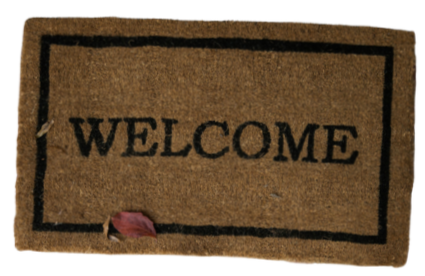
Welcome home
Last week I met a young woman from a small country in Africa who is trying to finish nursing school at a local university while raising a ten-month-old baby - the cutest little punkin’ head you ever saw.
Right now she is living with a friend, but that arrangement is ending soon because the friend is moving. She needs a place to live, ideally somewhere near campus since she takes an Uber back and forth to school. Because she is here on a student visa, she cannot legally work off campus, so she picks up weekend work “under the table” when she can. During the week friends take turns watching the baby while she attends class.
We talked through housing possibilities and a few leads. As we talked she seemed weary. At one point she said something that convicted me down to my bones.
“If I were back in my home country, my family and community would take care of me automatically and I wouldn’t have to worry about where to live, money, or transportation.”
She was describing something very simple: what it feels like to have a home.
Here, she explained, she has to investigate different agencies and organizations, hoping one of them might have a program, funds, or a connection that could help.
Then she sighed and added, “But this is the land of opportunity. At least I can get a good job here.”
Her comment revealed a tension I see often. In the United States there are many organizations trying to help people in difficult situations, and many of them do good work. But for someone who has just arrived, the system can feel like a maze. There are applications, eligibility rules, waiting lists, and referrals from one office to another.
For refugees and immigrants, learning how to navigate that world can be overwhelming. Even after they begin to understand it and receive the help they need, the loneliness remains.
So when she said that about her home country, I knew exactly what she meant.
A few years ago I began inviting refugees to live in my home. First Margo from South Africa and later Marco and Alma from Guatemala.
Living together with refugees gave me a completely different view of what it takes to rebuild a life in a new country. The paperwork, phone calls, driver’s tests, endless forms, and appointments still had to happen. But doing those things inside a relationship changed the experience of navigating the system.
One afternoon, for example, I went with Marco and Alma to a couple of job interviews. Later we sat down and talked through the offers they had received and tried to decide which one made the most sense. Learning how to evaluate work, pay, transportation, and schedules in a new country is not always straightforward, especially when you are still figuring out how the system works. But it’s much easier - and sometimes even fun - when you can come home and celebrate together over dinner.
Over time Marco and Alma began forming friendships in our neighborhood. They greet neighbors when they pass on the sidewalk, stop and talk, and sometimes get invited over.
Recently, while celebrating Alma’s birthday, I asked her what her favorite part of living in America was. She said it was the friends she has made here.
“Everyone is so kind to me.”
Experiences like these gave me a vision for what Project Dignity could become. The practical parts of rebuilding a life in a new country are real. But navigating those things in the context of friendship changes the experience. When people have someone beside them while they are figuring out how things work, they retain a sense of dignity and agency.
Friendship, however, is a tall order.
Inviting someone to live in your home asks something of you. It means sharing space, time, and ordinary life. But I have also learned that many people are more capable of this than they initially think. If you have the room and the willingness, it is worth considering.
Friendship can also begin in smaller ways. Coffee. Dinner. A walk. Lending an ear. Showing up for the ordinary moments that make up daily life.
These are the building blocks of the kind of community this young mother was talking about: a place where people look out for one another without being asked.
I have seen it happen again and again. Once refugees begin forming genuine friendships here, those relationships tend to last. They do not replace the homes people left behind. Nothing can do that. But they begin to approximate something many people thought they had lost when they came here: a community where they are known and where they belong.
That is what we are building through Project Dignity.
Our logo says “Welcome Home.”
Those words are easy to print.
Making them real is the work before us.